

Plenary Speakers
Opening Keynote Speaker
Barbara Dunn, Stanford University
What’s Brewing in Yeast Genetics?
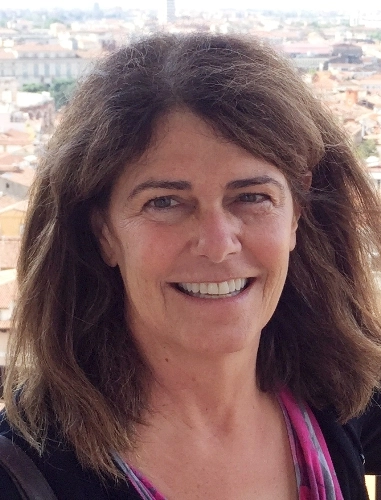 Brewing yeasts are notoriously difficult to work with genetically, due to their complex genomes which are often polyploid, aneuploid, and/or derived from interspecific hybridization events. However, new techniques, as well as the repurposing of more traditional techniques, hold promise for genetic manipulations of brewing yeasts as a way to combine or enhance beneficial traits already present in such yeasts, or to possibly identify and introduce novel traits from non-brewing yeasts. Some of these new or repurposed techniques can result in non-genetically-modified (non-GM) yeasts, but other “minimally invasive” GM techniques now exist that may eventually be deemed acceptable by consumers and the brewing industry as a way to obtain brewing yeasts with desired traits. Overall, a wide variety of tools are now available for the genetic manipulation of brewing yeasts to alter or enhance any of a number of characteristics, from fermentation behavior to sensory profile.
Guest Speaker
Kevin Verstrepen, KU Leuven
Studying the Yeasts of Yesterday to Generate the Beer Yeasts of Tomorrow
The common brewer's yeast, Saccharomyces cerevisiae, is used in a broad range of industrial applications, from the production of beer, wine, and bread to biofuels and pharmaceuticals. Interestingly, there are hundreds of different industrial yeast strains, but their origins and specific characteristics are largely unknown. Join presenter Kevin Verstrepen, who combined large-scale phenotyping with genome sequencing to track the genealogy and evolution of today’s industrial yeasts. Using this knowledge allowed him to set up large-scale breeding programs to generate superior variants that increase production efficiency and expand the range of yeast-derived products and aromas, allowing more efficient beer fermentation, the production of superior beers, and the creation of novel products.
Kevin Verstrepen is professor in genetics and genomics at KU Leuven and group leader in Systems Biology at VIB (Flanders Institute for Biotechnology). He serves as the director of the VIB Center for Microbiology, director of the Leuven Institute for Beer Research, and Honorary Professor at Nottingham University.
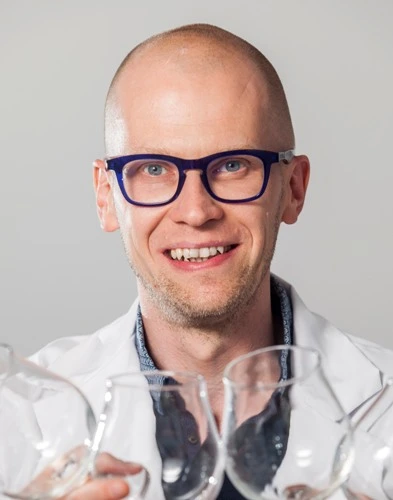 Verstrepen studied biological engineering at the KU Leuven in Belgium. For his MSc thesis, Verstrepen joined Isak Pretorius’ group at Stellenbosch University in South Africa, where he studied the genetics of yeast flocculation. His doctoral research at KU Leuven was aimed at characterizing yeast genes involved in flavor formation during fermentation. After obtaining his Ph.D., Verstrepen joined the lab of genetics pioneer Gerald Fink at the Massachusetts Institute of Technology (MIT) in Cambridge, U.S.A. Revisiting the topic of his MSc thesis, Verstrepen discovered that the genes responsible for yeast flocculation contain arrays of highly unstable repeats in their DNA sequence. After spending two years at MIT, Verstrepen joined Harvard University as a Harvard Fellow and group leader. In 2006, he became a lecturer and started teaching industrial microbiology to Harvard undergraduate students. Meanwhile, Verstrepen headed a research team dedicated to studying fundamental genetics using yeast cells as a model system. More specifically, building on the previous work, Verstrepen´s team unraveled molecular mechanisms underlying rapid evolution and adaptation, yielding several high-profile papers. In 2009, Verstrepen returned to Belgium where his team continues to investigate eukaryotic genetics and epigenetics using brewer´s yeast as a model system. In addition, the team is now also focusing on applications in the fermentation industry. In 2012, Verstrepen was appointed director of the newly established Leuven Institute for Beer Research (LIBR), a joint research center that unites different research teams at the university and two associated professional colleges. In 2017, he was appointed as scientific director of the VIB Center for Microbiology, where he leads a team of 100 researchers in the different laboratories at VIB that focus on microbiology.
Verstrepen was awarded highly competitive grants, including an ERC starting grant in 2009, an ERC consolidator grant in 2016 and two Human Frontier Science Programs. He also received an EMBO YIP fellowship and won several awards, including Harvard’s Derek Bok award for best teacher, the Golden Chalk award for best teacher in bio-engineering at KU Leuven, and the triennial Leo Errera Award for Biology of the Belgian Academy for Arts and Sciences.